Overview
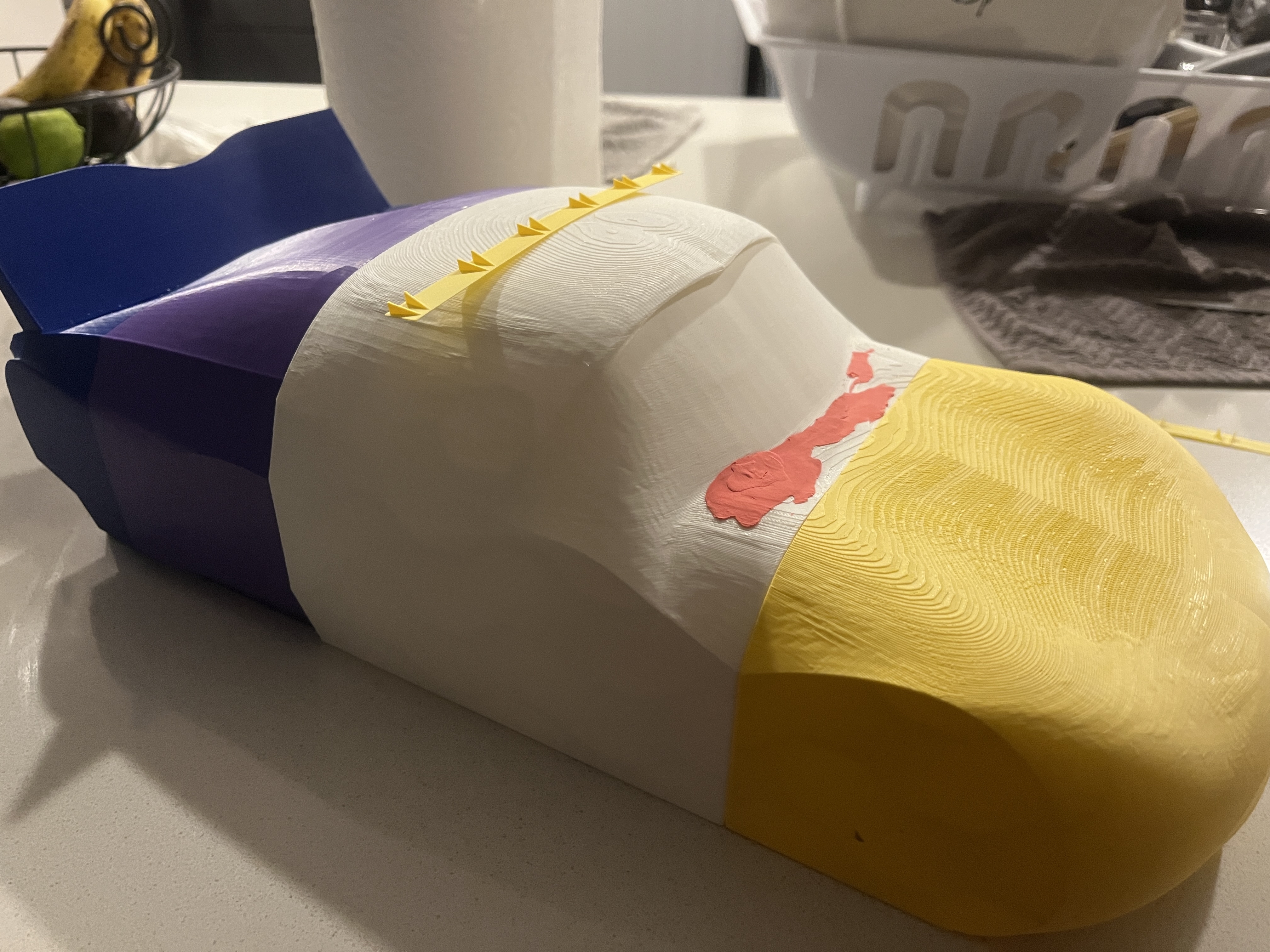
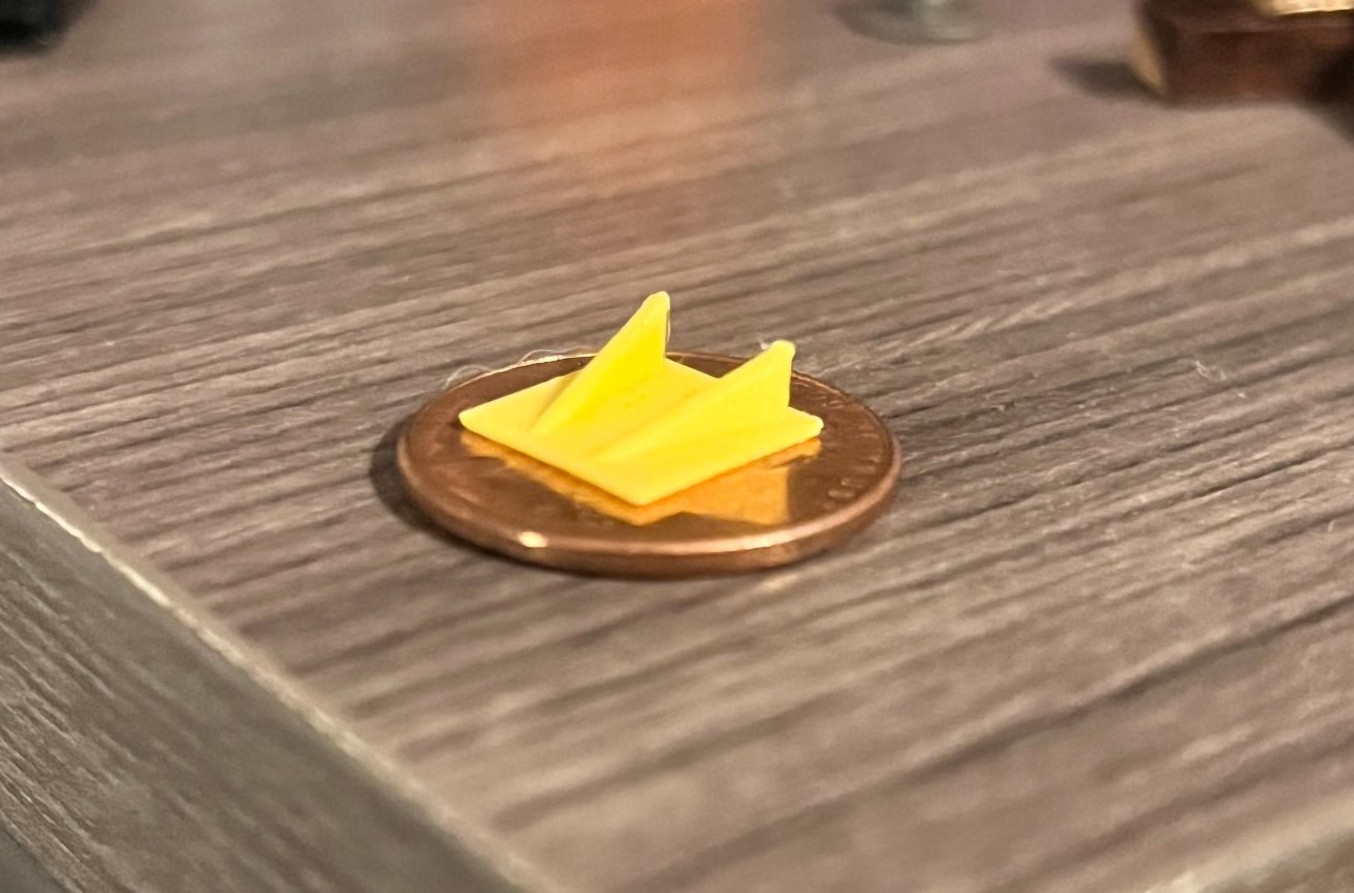
This was my final project for low-speed-aerodynamics. My team designed and tested a method to gauge the effectivness of vortex generators on cars. For a little background, vortex generators are usually little tabs that induce turbulence in the boundary layer. Some airplanes use them to keep air attached at high angles of attack, they are used by car enthusiasts, and in wind turbines.
Design & Process
Our final project gaves us the freedom to choose something to research using a wind tunnel or water tunnel. We chose to to analyze vortex generators as they are widely used in boundary control. The shape and size of our vortex generator was determined from reading puplished journals. As for the model, I wanted to maximize the size of it to get the Reynold's number (Re) as high as possible to match real world scenarios. Additionally, we were limited by the top speed of our open loop wind tunnel. We were able to achieve a Re up to 650,000 which is the equivalent of a honda civic driving through a parking lot. Even so, these little devices do their job well.
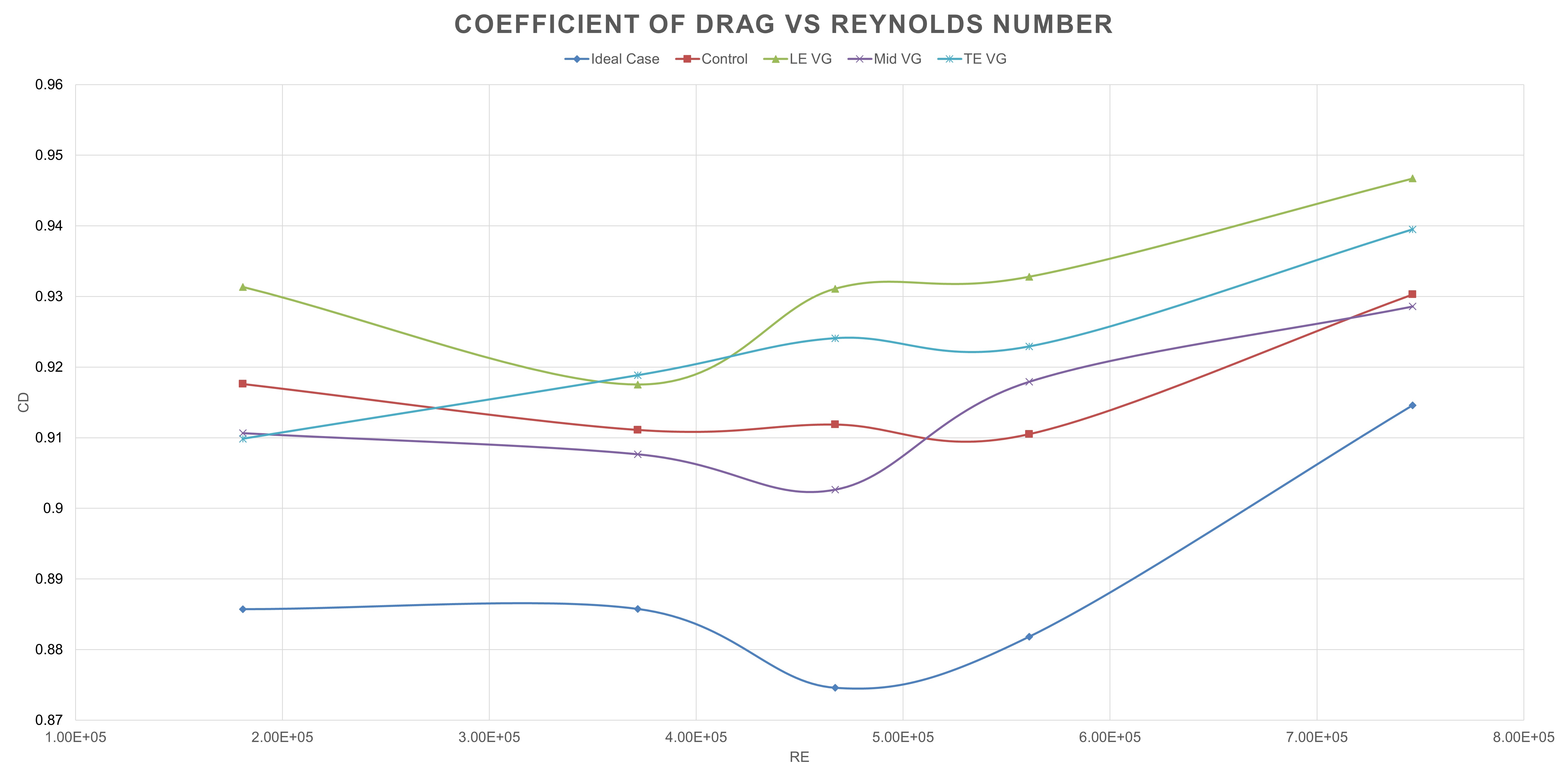
Results & Reflection
Overall, the results demonstrate that carefully placed vortex generators can meaningfully reduce drag by delaying flow separation under certain conditions. However, their effectiveness is strongly dependent on Reynolds number, local flow conditions, and vehicle-specific geometries