Overview
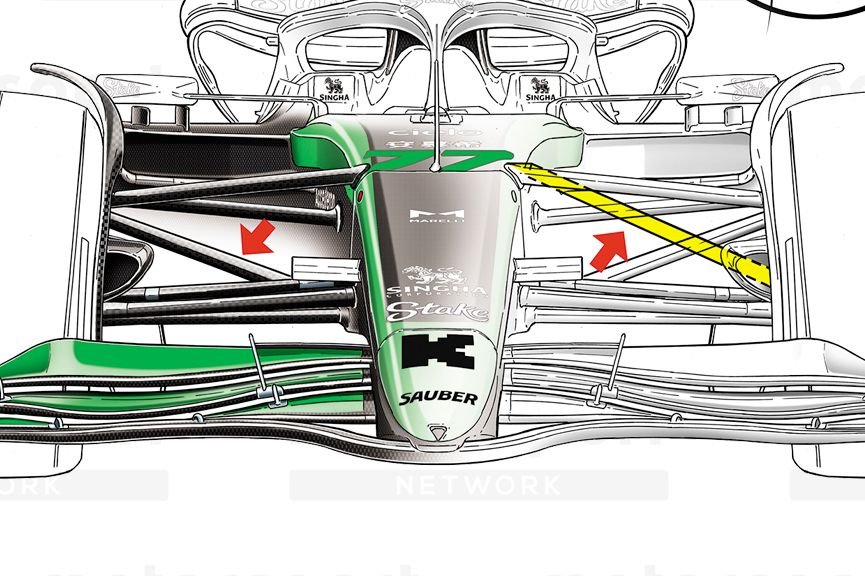
As part of the Composites subsystem, we are pushing to convert to the era of carbon fiber. Are we riding a wave? A fad? A glorified material? Maybe. But this introduces so many material concepts that it's great to experiment with. I was put in charge of producing a replacement for our aluminum pushrods currently on the car's suspension. Just a little something to catch you up—the suspension system on racing vehicles transmits forces from the tire to the shocks through these rods. These race cars will either use push/pull rods (same concept, just a different configuration).
Design Considerations
Many factors must be considered when replacing a conventional metal part with carbon fiber:
- You can't just thread a rod and stick a bolt in it.
- Compressive Strength
- Tensile Strength
- Insert Design
- Adhesion and Cohesion
Research Process
The main advantage of carbon fiber is that it has amazing tensile strength compared to its weight. Weight reduction is achieved by layering multiple
plies of carbon fiber cloths and using a special epoxy-resin to fill the air pockets. This gives it an excellent strength-to-weight ratio.
On the downside, it is relatively weak in out-of-plane shear (a perpendicular force) and compression—so we've basically lost two degrees of freedom.
To compensate for this, we need special ways to interface metal to composites and to maximize tension and in-plane forces.
When running tests, we expect something to fail, and I wanted things to fail in a specific order:
(First) Cohesion → Adhesion → Pushrod → Insert (Last)
How to Interface Metal and Carbon Fiber
Without becoming a technical paper, I’ll keep it brief. Some things are "stickier" than others, like Teflon compared to paper. Adhesives such as
tape and glue don't stick to Teflon but are great on paper. Carbon fiber and aluminum are closer to Teflon, so special processes were taken to
increase the surface energy of these materials so we could bond them with epoxy.
The idea is to insert a small piece of metal at the ends of the rod so it can be threaded and allow a bolt to go through it.
Now we’ve solved how to connect a carbon component to a metal frame.
Tensile Strength
To gauge the strength of the pushrod in tension, we ran several tests. We first performed an FEA using the ACP tool in ANSYS Mechanical
to get an estimate of what to expect. This method is cheap and fast; however, composites are famously anisotropic and hard to characterize.
ANSYS can give you a decent prediction, but that alone won’t persuade a team to integrate this idea.
Furthermore, adhesive bonds like epoxy are a whole science on their own due to the physics of friction and surface interaction.
Even now, it’s hard to describe friction—especially in simulation software.
The next logical step was real-world validation. Using an Instron machine, we observed the failure points of our pushrod;
whether that be the adhesive bond, cohesion of the epoxy, the pushrod snapping, or the insert galling.
Each case tells us something different and helps improve the design.
Compressive Strength
Like I mentioned earlier, fiber laminates such as carbon fiber perform poorly in compression, but they still hold up to some degree. To gauge how screwed we would be if it failed, we ran several tests on a hydraulic press to observe when failure would occur. We expected to see the pushrod snap, buckle, or split like a log. This test is by far the most important since our pushrod will experience significant compression.
Insert Design
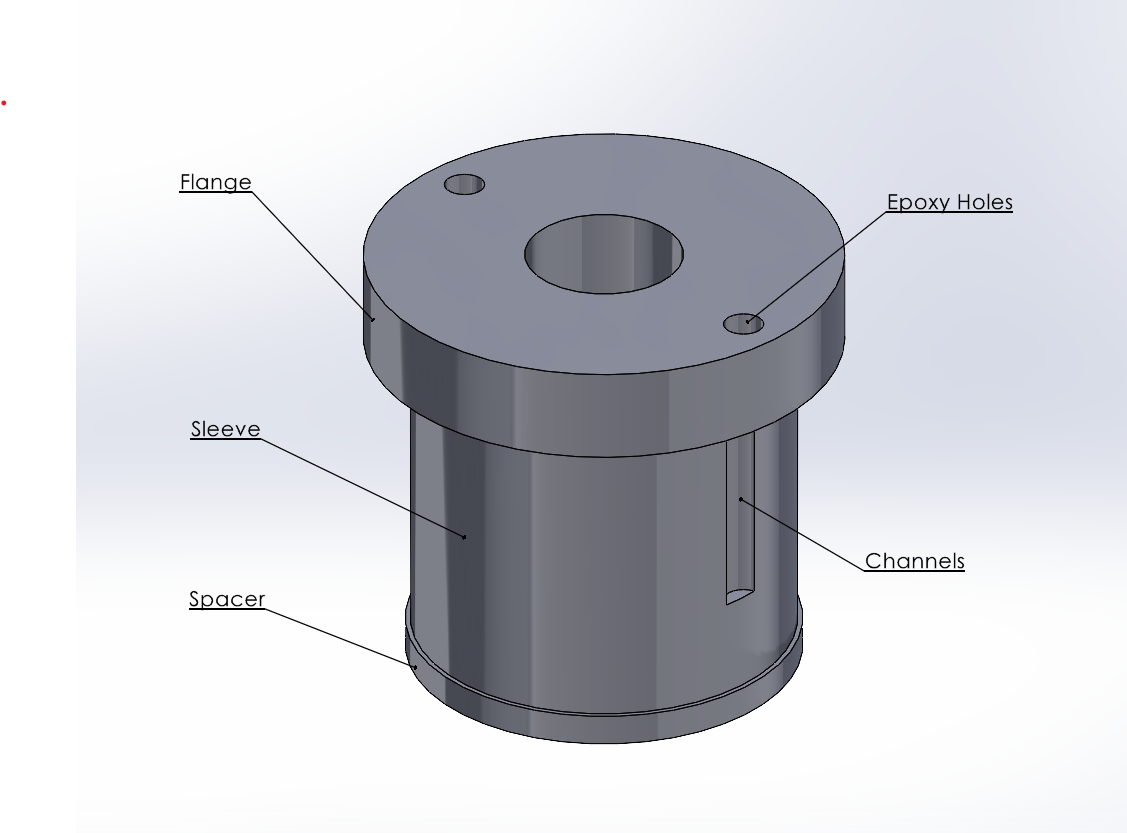
The design of the insert is also critical since it transmits all the load through the bolt to the suspension. The basic idea is to act as a
sleeve that fits inside the pushrod. The longer the sleeve, the stronger the bond strength due to increased epoxy contact.
However, make it too long and—congratulations—you’ve made an aluminum pushrod.
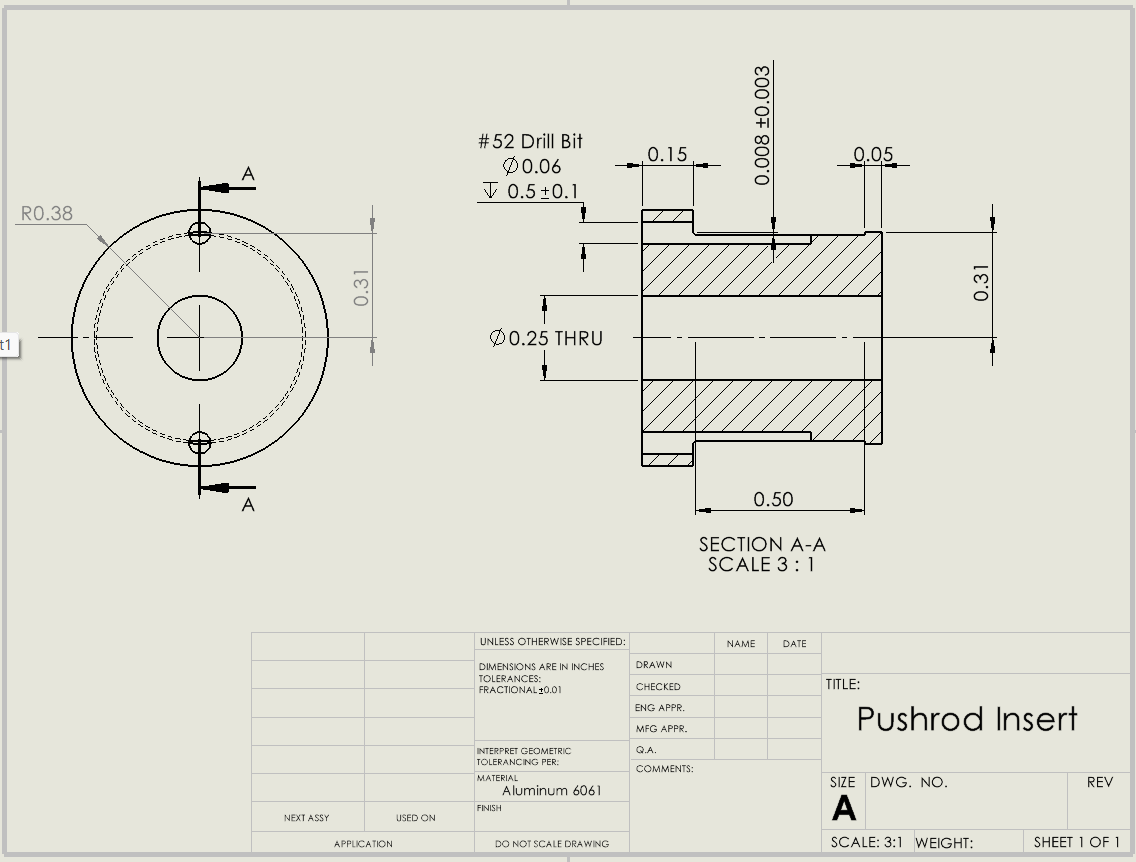
To optimize this, I calculated the length needed to sustain an arbitrary load using the lap shear strength from the epoxy's datasheet and
the inner diameter of the pushrod.
We also needed a method to inject epoxy into the gap without runoff or voids. My first idea was to simply coat the insert with epoxy
and then slip it into the pushrod. Other teams have drilled two small holes opposite each other in the pushrod, but that compromises strength
since the fibers are no longer continuous.
My solution was to include two small holes through the top of the insert, forming channels to allow epoxy flow. Other important
factors included flange thickness, material type, and the addition of a spacer at the bottom of the insert to prevent epoxy runoff
and maintain concentricity.
Adhesion and Cohesion
Last but not least, the bond between the carbon fiber surface and aluminum insert is one of the most critical aspects. Ideally, we would see
cohesive failure in the epoxy; A split along the midplane of the bond. This indicates that everything within our control has been optimized
to maximize the strength of the pushrod.
The use of silica beads was another idea to create an even bond gap (for concentricity) and increase shear strength. However, this must be done
in the correct ratio, or it could weaken the cohesion. Finding that ratio was also part of this research.
Adhesion, as mentioned earlier, can be improved through physical abrasion (to increase surface area) or chemical treatment (to raise surface energy).
Adhesion is something we have more control over than cohesion, so we must do everything possible to maximize that bond.
Alright, yap session over — you can ask me personally for more details.
Results & Reflection
Some things to note: Proper surface prep was not achieved which led to very low pullout strength in the first iteration of tests. Recall
earlier I said I wanted a chain of things to break to find the weakest link. From the first tensile test, the bond strength (adhesion) was the
weakest constraint. We reached about 5% of our theoretical max strength. A second tensile test was conducted later on using silica filler
which improved the strength and we were able to achive 30% of our max. Once again however, the weakest link was the adhesive bond.
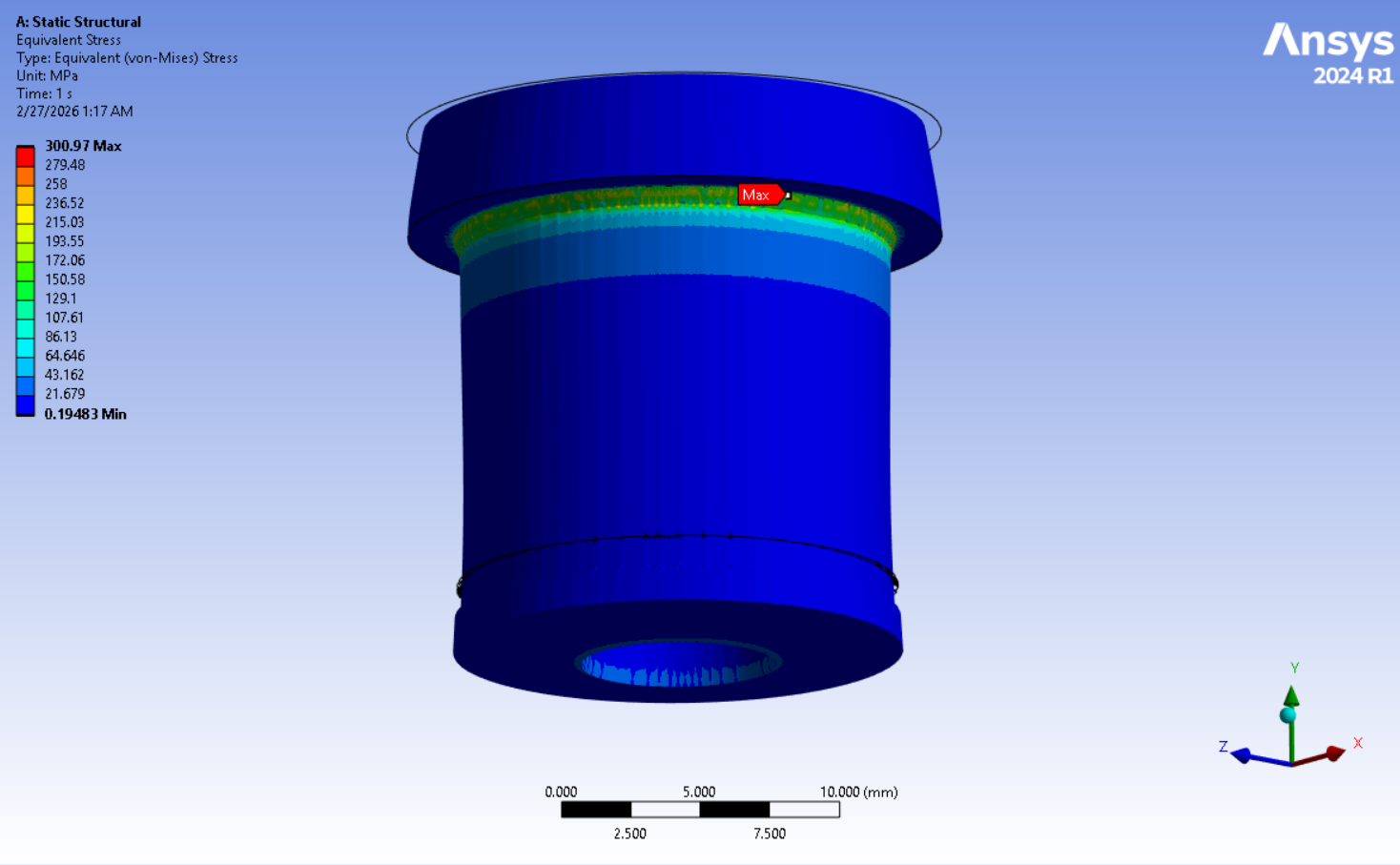
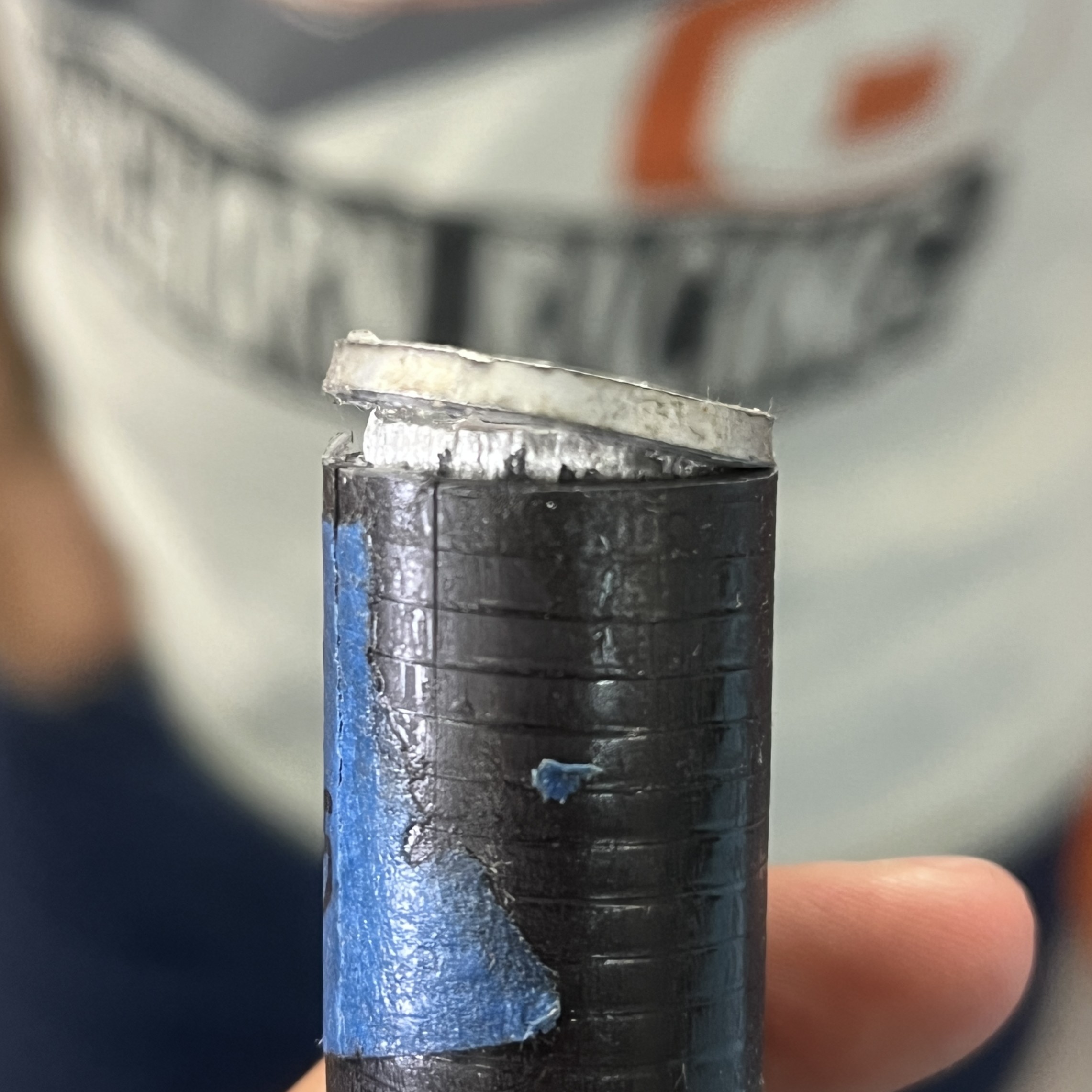
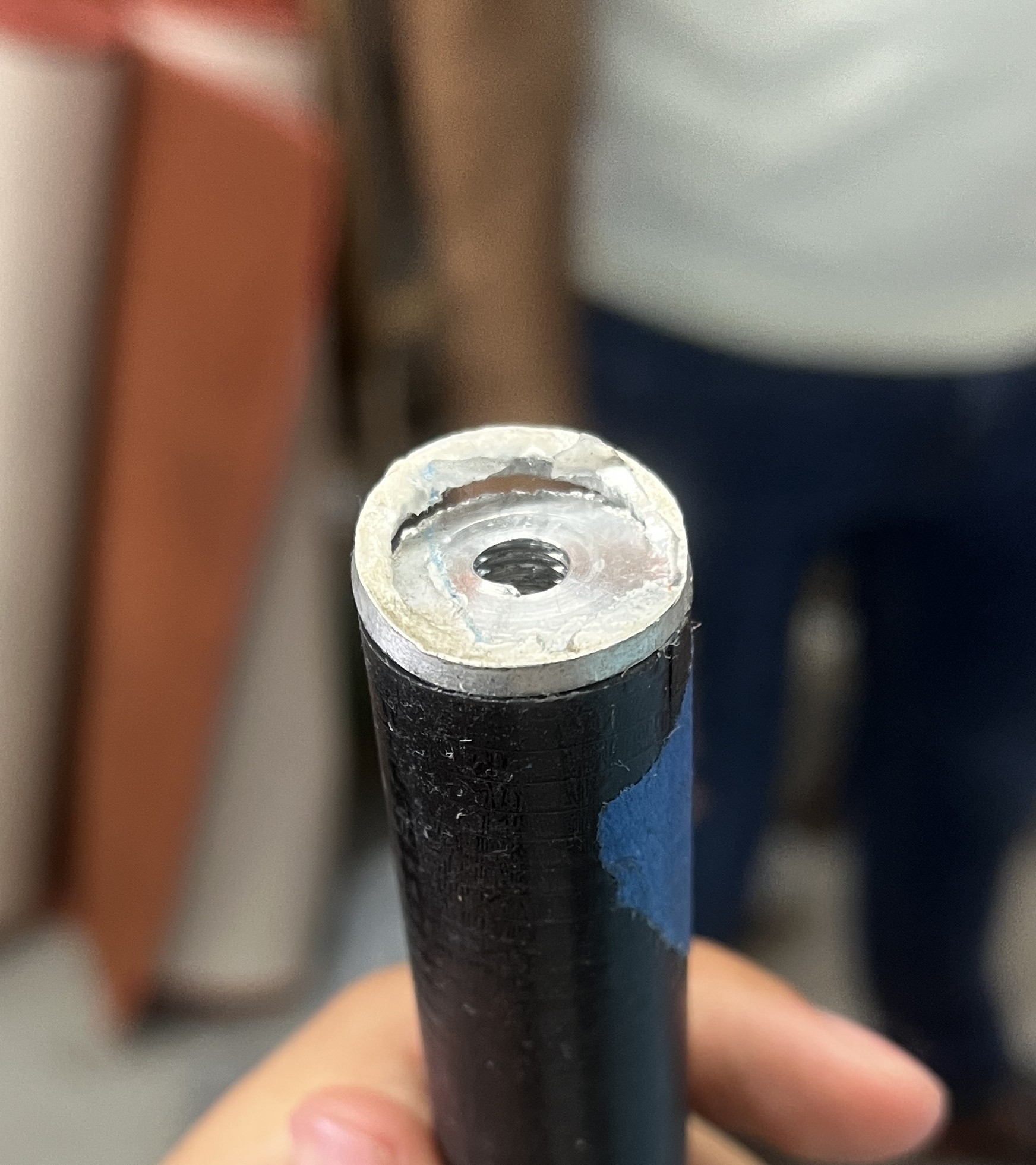
In the compression test, our weakest link was the insert itself and the pushrod survived for the most part. The flange sheared off
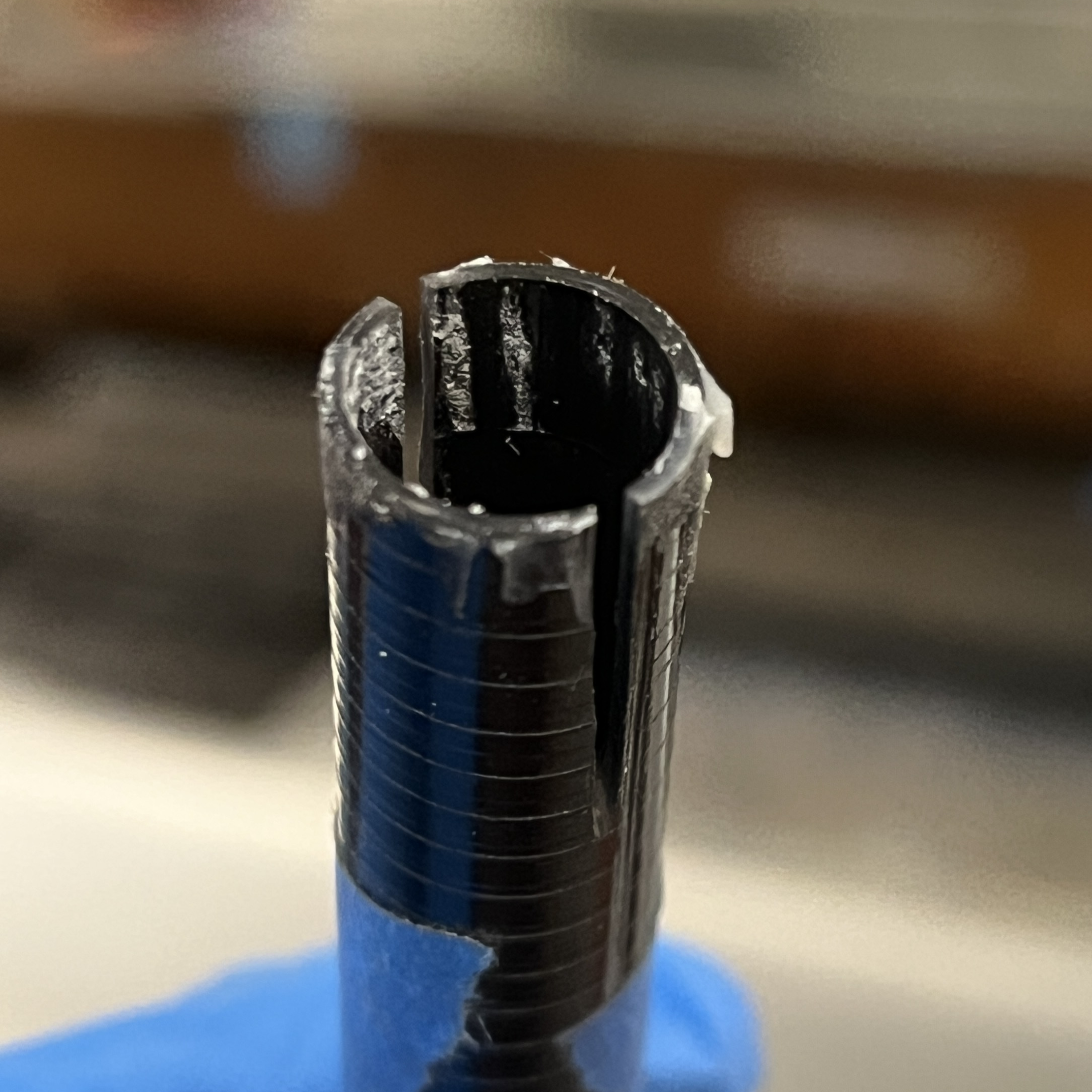
which means it needs to be thicker or made of a stronger material. From the pic we could see that the pushrod sustainted some splitting at the very top
which means the hoop strength of the carbon fiber tube was next to fail.